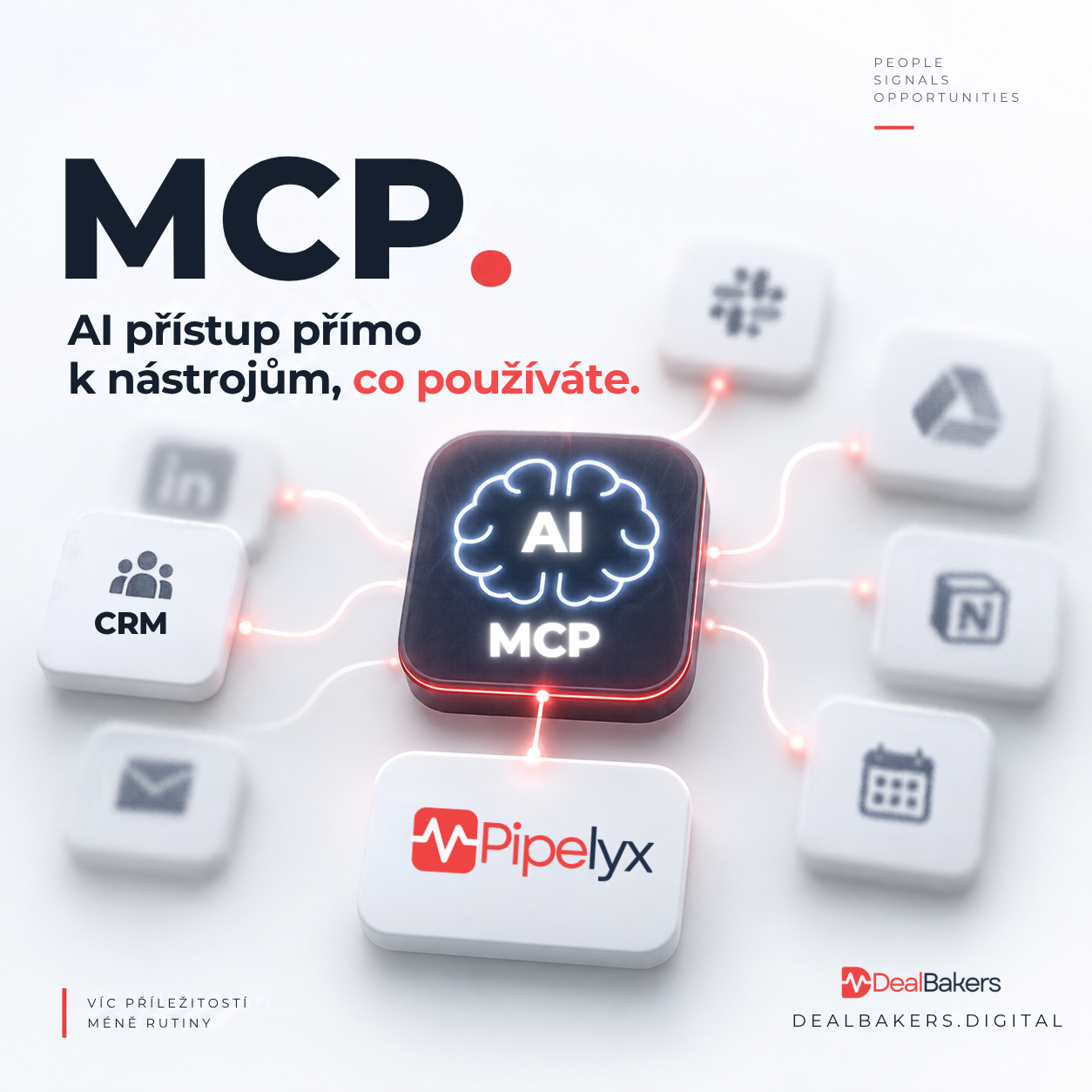
The acronym MCP has recently appeared almost everywhere AI and business tools are discussed. Model Context Protocol is a standard that lets an AI assistant connect directly to the tools you already use. There is no extra interface to learn and no specialist needed just to wire everything together. You only need to know what you want to happen and tell your AI assistant.
Last week, we put this connection to a real-world test: we made Pipelyx available through MCP for both Claude and GPT.
What actually changed
We have kept our target-customer definition — ICP, segments and criteria — in Claude for some time. Once Pipelyx was connected as a tool, we only had to describe what should happen. No rewriting prompts from scratch and no manual copying of data between systems.
The aha moment came quickly. In practice, this means better prospecting, better prioritization and simpler control of the whole process. Not because AI suddenly knows how to sell, but because the layer of manual work between your intent and the required action disappears.
Two specific things we can now ask for
1. Scan the network and find who is worth talking to
AI reviews your LinkedIn network, identifies potential customers using clearly defined parameters, retrieves their activity and recommends who to approach and how to start the conversation.
2. A morning report instead of a morning search
Every morning, you get an overview of who joined your network, who viewed your profile, who matches your target audience and who is worth contacting that day.
Both examples answer the question every salesperson asks over morning coffee: who deserves my time today? The answer is no longer based on a guess, but on data and signals.
AI finds the moment. We decide whether it is worth using
One thing has not changed, and it matters: we still press the send button ourselves.
AI can review the network, assemble context, highlight a signal and suggest how and when to engage. But it does not decide whether that moment is genuinely relevant, and it does not write the final message without review. That is the difference between a tool that saves time and one that pretends to sell on its own — only to send generic personalization at scale.
A signal without context is just another notification. A salesperson still has to decide whether it is worth acting on — and how.
Where we believe this is heading
In practical terms, the acquisition homework — reviewing the network, evaluating signals and preparing outreach suggestions — can be handled on the way to work, with AI acting as an assistant that prepares the groundwork. The rest of the day can then focus on what truly moves sales forward: client conversations, not the routine of finding someone to talk to.
This is not about having more automation. It is about having less routine between a decision and an action.
Where are you?
Some teams already connect AI with sales tools extensively; others are still discovering what MCP means in practice. We would like to know how you have set it up — and whether your network may hold more opportunities than you think.
Frequently asked questions
Want to see what Pipelyx can uncover in your network?
Book a short meeting. We will look at your target audience, signals and opportunities for a more efficient sales process.
Book a meeting